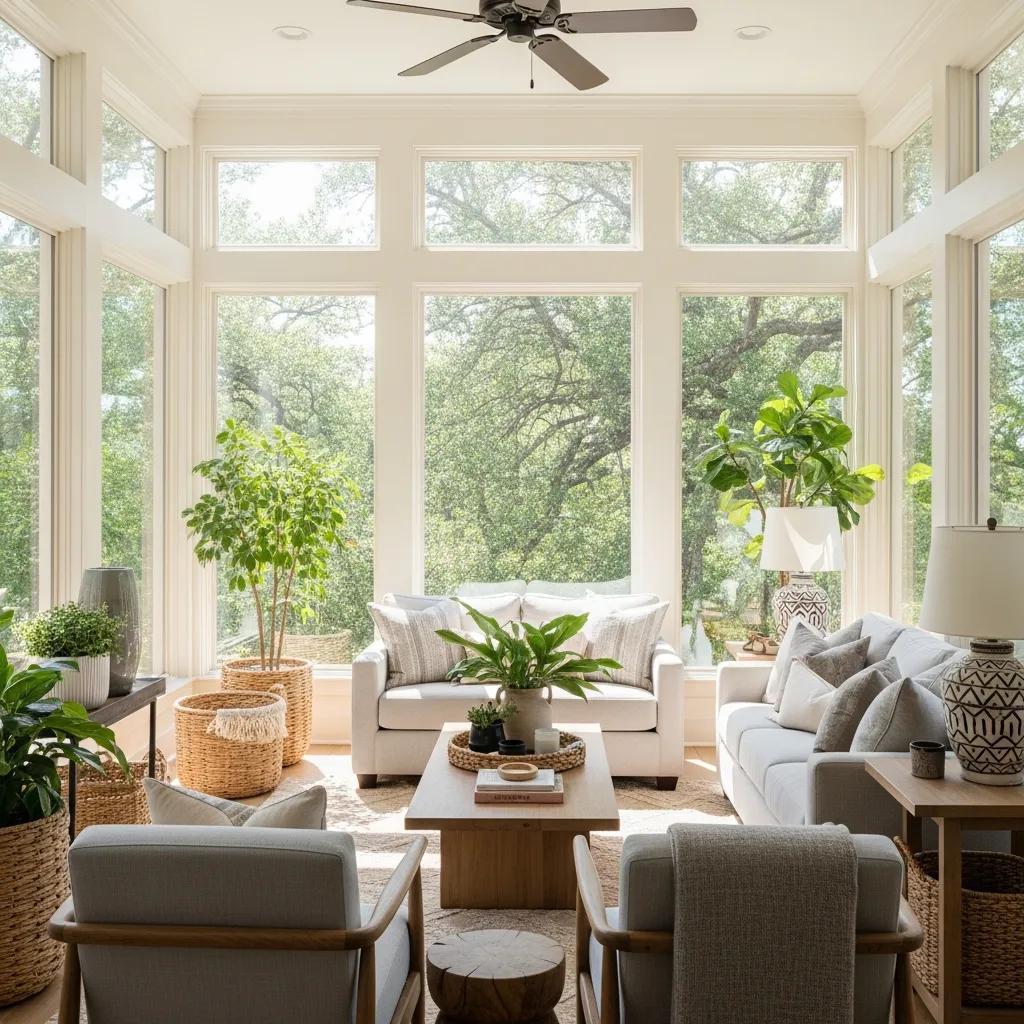
How Texas Weather Affects Your Sunroom Experience
Texas Weather & Your Sunroom: How Climate Shapes Installation, Durability, and Comfort

Texas combines long, hot summers, strong sun, seasonal humidity and occasional severe storms — all of which put unique strain on sunroom glass, framing, roofs and indoor comfort. This guide explains how those forces speed up material wear, raise cooling bills, increase hail and wind risk, and shape permitting and installation choices here in markets like San Antonio. You’ll get practical mitigation steps — from glazing and insulation specs to storm‑ready framing, drainage best practices, and HVAC and shading options — that extend durability and make your sunroom usable year‑round. We also compare common framing and roofing materials, present clear glazing and drainage comparison tables, and outline how local codes and professional installation affect cost, schedule and performance. Throughout, our focus is on actionable recommendations that help homeowners balance comfort, energy efficiency and resilience — and where hiring a pro can make compliance and execution far easier.
Knowing how heat, UV, humidity and storms damage components makes it clear why some products and installation methods work better in Texas. The next section breaks down heat effects and three high‑impact mitigation steps people most often search for.
How Does Texas Heat Affect Sunroom Durability and Comfort?
High daytime temperatures and strong solar radiation increase the thermal load on sunrooms, driving interior temperatures up and speeding UV damage to glazing seals, frame coatings and fabrics. Heat also causes different materials to expand at different rates — glass and frames can move against each other and eventually break seals or wear weatherstripping. Add high solar heat gain and you get higher cooling bills and interior discomfort; humid evenings after hot days can also cause condensation problems. Choosing the right glazing, roof insulation, shading and ventilation helps slow that wear, cut energy use and keep the space comfortable.
For quick wins, start with a tight building envelope, add effective shading, then size active cooling to handle peak loads. The table below summarizes glazing and insulation options and the performance trade‑offs designers and homeowners should weigh.
This table compares glazing and panel options to help select the right combination for Texas sunrooms.
| Component | Key Performance Metric | Typical Value / Benefit |
|---|---|---|
| Insulated Double-Glazed Units | U-value (thermal transmittance) | Lower U-value (≈0.30–0.45 BTU/ft²·°F) reduces heat transfer |
| Low-E Coatings | Solar Heat Gain Coefficient (SHGC) | Lower SHGC (≈0.20–0.35) cuts solar heat gain while preserving light |
| Insulated Panels (roof) | R-value | Higher R-values (R-10 to R-20) reduce roof heat gain significantly |
Choosing insulated glass with Low‑E coatings and pairing it with a thermally efficient roof lowers cooling loads and limits UV exposure. The next subsection dives into insulation and UV protection choices you should consider.
What Are the Best Insulation and UV Protection Solutions for Texas Sunrooms?
The most reliable defenses are insulated glazing with Low‑E coatings, thermal breaks in frames sized correctly, and insulated roof panels. Low‑E coatings reflect infrared heat while letting visible light through, which lowers SHGC and helps protect furniture from UV fade — effective Low‑E units typically fall in the 0.20–0.35 SHGC range depending on the light you want. Insulated roof panels with higher R‑values reduce conductive heat through the roof and lower peak cooling demand. Seal maintenance, quality weatherstripping, thermal breaks on metal frames, and optional UV films provide extra protection while keeping views. Regular seal inspections and re‑caulking when needed maintain performance and reduce condensation risk from thermal cycling.
With the envelope in good shape, passive airflow and mechanical systems become much more effective — that’s the focus of the next subsection.
How Can Ventilation and Cooling Systems Enhance Year-Round Sunroom Use in Texas?

Comfort in Texas comes from layering passive strategies with the right active system. Passive ventilation — operable windows, roof vents and cross‑flow paths — can cut daytime heat buildup when outdoor conditions allow. Exterior shading (awnings, overhangs) blocks solar gain before it reaches glass. For consistent, year‑round comfort, a properly sized ductless mini‑split gives targeted cooling and dehumidification without complex ductwork; mini‑splits pair especially well with tight, insulated sunrooms. Ceiling fans and planned intake/exhaust openings help perceived comfort and reduce HVAC run time. When sizing equipment, account for the higher heat load from large glass areas and specify units with good dehumidification performance.
Research highlights the role of smart ventilation strategies in hot, humid climates.
Sunroom Ventilation in Hot-Humid Climates
A cupola above the central stair ventilates both the attic and a two‑story sunroom on the south side, illustrating passive ventilation strategies used in hot‑humid settings.
Mean Radiant Cooling in a Hot-Humid Climate, 1996
The best results come from matching envelope improvements, passive measures and a correctly sized mini‑split. Many homeowners choose professional specification and installation to guarantee performance and meet code. Express Sunrooms offers insulated glass, thermal roofing and ventilation solutions — and we can provide on‑site evaluations and tailored quotes for your home.
What Storm-Resistant Features Are Essential for Sunrooms in Texas?

In Texas, sunrooms must stand up to hail, strong winds and heavy rain. That means impact‑rated glazing, reinforced framing and dependable water‑management details that prevent structural damage and leaks. Laminated or impact glass reduces the chance of breach during hail, while engineered framing with proper anchors and tie‑downs meets wind‑load requirements. Correct flashing, overhangs and drainage move roof and gutter water away from vulnerable seams. Together these measures reduce insurance claims and extend the useful life of the sunroom under intense storm events.
For quick reference, here are the three most important storm‑resistant features and why they matter.
Sunroom storm protection focuses on a few core elements:
- Impact-Resistant Glazing: Stops penetration from hail and flying debris to protect people and interiors.
- Reinforced Framing and Anchoring: Keeps the structure meeting wind‑load requirements and resists uplift and racking.
- Robust Drainage and Flashing: Directs water away from seams to prevent long‑term water damage and rot.
Using rated components and professional installers reduces failure risk during severe weather and helps satisfy insurance inspections. The next subsection explains glazing and framing options in more detail.
This table compares storm-resistance features by protection level and maintenance.
| Feature | Protection Level | Maintenance / Lifespan |
|---|---|---|
| Laminated Impact Glass | High (resists penetration) | Low; occasional seal inspection |
| Reinforced Aluminum Framing | Medium-High (stiffness, anchors) | Low; check fasteners after storms |
| Drainage Systems & Flashing | High (prevents water intrusion) | Medium; periodic cleaning and inspection |
Impact‑rated glazing and reinforced framing reduce replacement frequency and protect occupants; keeping drainage clear prevents the secondary damage storms often cause. The following subsection explains how these systems work together against hail and wind.
How Do Impact-Resistant Glass and Reinforced Framing Protect Against Texas Hail and Winds?
Impact glazing uses laminated layers or tempered laminates that absorb and spread impact energy, so even if the outer layer cracks the assembly usually remains intact and keeps water and debris out. Ratings from impact tests and missile‑impact standards give a clear performance expectation. Reinforced framing — engineered aluminum with thermal breaks or reinforced composites — adds stiffness and helps the assembly resist wind pressure and uplift. Proper anchoring to the foundation, necessary steel reinforcement and continuous load paths transfer forces safely into the structure and limit racking. Inspect after major storms to catch localized damage before it becomes costly.
Knowing common failure modes — seal breakdown, frame deformation or flashing breach — helps you target maintenance and retrofits. Next we explain why drainage matters as much as structural strength.
Why Is Proper Drainage Critical for Sunroom Longevity in Texas Storms?
Good drainage and flashing stop water from entering at roof‑to‑wall transitions, sill lines and penetrations. Without it, standing water weakens sealants, invites rot in nearby building parts and can even affect foundations. Effective measures include sloped sill assemblies, scuppers or gutters sized for heavy rain, continuous flashing at connections and site grading that directs runoff away from the building. Maintenance — clearing debris, checking for clogs and inspecting seals after storm seasons — keeps systems working. Skipping simple checks often leads to interior damage and repairs that could have been avoided.
Clear, maintainable drainage protects insulation performance and lowers long‑term repair risk. The next section compares frame and roofing materials that matter for moisture control.
Which Sunroom Materials Best Withstand Texas Climate Challenges?
Your material choices determine how well a sunroom handles heat, humidity and storms. Common options — vinyl, aluminum, wood and engineered composites — vary in thermal conductance, corrosion resistance, impact resistance and upkeep. Choose based on sunroom type (three‑season vs. four‑season), expected lifespan, aesthetics and local exposure. Thermal performance and corrosion resistance are critical in humid or coastal areas; dent and hail resistance matter where storms are frequent. The table below summarizes how materials compare for durability, maintenance and suitability.
This table compares common framing materials on attributes relevant to Texas conditions.
| Material | Durability / Corrosion | Thermal Performance | Maintenance |
|---|---|---|---|
| Vinyl | Good; resists moisture | Moderate (low conduction) | Low; occasional cleaning |
| Aluminum (with thermal break) | High strength; can corrode without coating | Moderate to low unless thermal break used | Low; inspect coatings |
| Wood (engineered) | Aesthetic; susceptible to moisture/rot | High insulative potential | Higher; periodic sealing and paint |
Impact resilience and installation needs also influence choices. Vinyl is low‑maintenance but less suited to wide spans; aluminum gives strength with minimal upkeep when paired with thermal breaks; wood offers warmth and insulation at the cost of more care. The next subsection outlines pros and cons for each material.
What Are the Pros and Cons of Vinyl, Aluminum, and Wood for Texas Sunrooms?
Vinyl frames are affordable, moisture‑resistant and low maintenance, but they have lower structural capacity for large spans and can deform in extreme temperature swings. Aluminum frames offer high strength and low upkeep; without thermal breaks they conduct heat, which can lead to condensation and higher energy use. Wood frames bring natural beauty and good insulation but need regular sealing or painting to resist humidity and pests. Engineered composites blend strength, low maintenance and better thermal performance, though they cost more up front. Your priorities — low upkeep, structural span capacity or aesthetic warmth — should guide the choice.
How Do Thermal Roofing and Insulated Panels Improve Energy Efficiency?
Thermal roofing and insulated roof panels reduce conductive heat transfer and lower peak cooling loads — the higher the R‑value, the more heat gain you block. Reflective coatings reduce radiant heat absorption, and insulated panels combine reflectivity with insulation to tackle both radiant and conductive heat. A ventilated roof assembly can vent hot air before it transfers inward. Picking the right roof system affects HVAC sizing and operating costs; designers must balance R‑value, reflectivity and structural limits to maximize lifecycle value.
Well‑specified thermal roofing simplifies HVAC selection and raises comfort. The next section explains how local permits and codes shape installation choices and who handles them.
How Do San Antonio Building Codes and Permits Impact Sunroom Installation?
San Antonio building and zoning rules determine whether a sunroom needs a permit, which wind and structural calculations must be provided, and which inspections are required. Additions that change a footprint, roofline or create conditioned space usually trigger permits; plan review and staged inspections ensure compliance with structural, energy and egress rules. Expect a permit submission, a review period and inspection milestones. Addressing permitting early reduces delays and unexpected costs.
Typical permit steps are preparing engineered plans (if required), submitting for review, and scheduling inspections at key stages like foundation, framing and final. Because these steps can be technical and time‑sensitive, many homeowners rely on professional installers to manage the process. Express Sunrooms offers permitting support and coordinates with local officials as part of our installation service to reduce the administrative load on homeowners.
The checklist below outlines common permitting steps homeowners will run into in San Antonio.
- Plan Preparation: Provide drawings and engineering as required by project scope.
- Plan Review: Allow time for municipal review comments and update plans if needed.
- Inspections: Schedule foundation, framing and final inspections during construction.
Contractors who handle permits reduce the chance of rework and schedule slip; the next subsection explains why professional installation matters beyond paperwork.
What Are the Key San Antonio Regulations for Sunroom Construction?
Key San Antonio considerations include zoning setbacks, structural design that meets local wind‑load rules, energy code requirements for conditioned spaces, and floodplain rules if your site is regulated. Plan submissions commonly need dimensioned site plans, framing plans and, for four‑season enclosed rooms, energy compliance documentation. HOA rules and neighborhood covenants can add another approval layer, so check governing documents early to avoid redesigns. Knowing these checkpoints before you pick materials and placement saves time and ensures the finished sunroom is permitted.
Research focused on Texas climates, including San Antonio, shows how changing outdoor conditions can affect cooling system performance.
Texas Cooling System Performance in Changing Climates
A case study including San Antonio shows that climate change and shifting outdoor design conditions can alter cooling degree hours and affect cooling system performance.
Assessment of outdoor design conditions on the energy performance of cooling systems in future climate scenarios—A case study over three cities of Texas …, A Karimi, 2022
Understanding required documents and timelines avoids surprises. Contractors who work regularly in the city can streamline the process and advise on code‑driven material choices. The next subsection covers why hiring professionals matters.
Why Is Professional Installation Important for Compliance and Durability?
Professional installers ensure structural and envelope details — anchoring, flashing, sealants and mechanical penetrations — are done to code and in line with manufacturer warranties, which is vital in areas with severe weather. Installers familiar with local inspections can avoid common rejection points by using accepted details and documentation. Pros also check product compatibility (for example matching thermal breaks with insulated glazing) and stage work to protect materials during construction. For homeowners, a licensed installer reduces liability, preserves warranties and typically gives a longer service life to the finished sunroom.
When permitting and weather resilience matter, hiring professionals to manage design, material selection and permit coordination reduces project risk. Express Sunrooms provides installation and permitting coordination as part of our turnkey service for homeowners.
How Can Homeowners Maximize Sunroom Enjoyment Despite Texas Weather Extremes?
Getting the most from a sunroom means balancing light and views with thermal comfort, durable materials and flexible HVAC and shading strategies. Proper orientation and shading lower peak solar loads; low‑maintenance furnishings and flooring resist UV fade and humidity. Thoughtful plant choices, layered lighting and a layout that supports airflow make the room useful across seasons. Combine insulation upgrades, targeted mechanical systems and movable shading for year‑round comfort. Small behavior changes — timed shading, programmed HVAC setbacks and ceiling‑fan use — also cut operating costs while preserving enjoyment.
Recent studies reinforce the value of passive solar strategies for thermal comfort and energy savings in homes.
Passive Solar Strategies for Thermal Comfort and Energy Efficiency
A review of passive solar design shows how orientation, shading and thermal mass can improve thermal comfort and reduce energy use in residential buildings across climates.
An Overview of the Effects of Passive Solar Strategies on Thermal Comfort, JN Uwa, 2024
Below are practical design and décor choices that boost usability and durability without sacrificing style.
- Choose low-maintenance materials: Pick water‑resistant floors, UV‑stable fabrics and sealed cabinets to resist humidity and sun fade.
- Prioritize flexible shading: Exterior awnings or motorized shades stop heat at the source, while interior blinds control glare.
- Optimize layout for airflow: Arrange furniture to keep ventilation paths clear and place heat‑generating appliances away from glazing.
These practical choices pair well with energy upgrades, which deliver measurable comfort and cost improvements.
What Design and Decoration Tips Enhance Comfort and Usability Year-Round?
Choose flooring and furnishings that stand up to humidity and direct sun: sealed tile, engineered composites or high‑density porcelain handle moisture and fading better than many natural woods. Use UV‑stable fabrics for cushions and window treatments; pick breathable furniture to avoid trapped moisture. Position seating to balance views and shade, and add hardscape transitions that shed water away from thresholds. Layer lighting — task, ambient and accent — for evening use without adding heat. Low‑maintenance, sun‑tolerant plants can boost comfort and air quality with minimal upkeep.
These design moves help your sunroom stay beautiful and functional despite Texas extremes. The final section explains how energy upgrades pay back through comfort and lower peak loads.
How Does Energy Efficiency Reduce Costs and Improve Comfort in Texas Sunrooms?
Energy upgrades — insulated glazing with Low‑E coatings, thermally broken frames, insulated roofing panels and a correctly sized mini‑split — cut peak cooling demand and stabilize indoor temperatures, which lowers HVAC runtime. Simple actions, like deploying exterior shading during peak sun and using ceiling fans to raise thermostat setpoints, reduce peak energy use without sacrificing comfort. Savings vary by sunroom size and exposure, but combining envelope improvements with right‑sized mechanical systems yields the biggest reductions in operating hours and cost. A staged upgrade path — start with glazing and roof insulation, then add shading and HVAC — delivers noticeable comfort improvements quickly.
If you’re ready to explore options, request a consultation and quote to find the best glazing, roofing and ventilation mix for your property. Express Sunrooms provides evaluations, product recommendations and installation services, and we can coordinate permitting and inspections as part of the project.
- Request an evaluation: Have a pro assess your glazing, roof and ventilation needs.
- Compare upgrade packages: Start with envelope measures for the biggest long‑term impact.
- Schedule installation and permitting support: Use a contractor who coordinates with local authorities for a smoother build.
These steps move you from assessment to installation while addressing both comfort and resilience in Texas weather.
Frequently Asked Questions
What are the most effective shading solutions for Texas sunrooms?
The most effective shading options are exterior awnings, pergolas and motorized shades. Exterior awnings block sunlight before it hits the glass and cut heat gain substantially. Pergolas give filtered shade while allowing airflow, and motorized shades let you control light and privacy easily. Strategically placed trees or shrubs add natural shade. Combining these with reflective films on windows can further reduce heat and glare for a more comfortable sunroom year‑round.
How can homeowners maintain their sunroom to withstand Texas weather?
Regular maintenance keeps a sunroom resilient. Inspect seals and weatherstripping and replace worn pieces to avoid leaks. Clean gutters and drains so water flows freely and doesn’t back up into seams. Check wooden frames for signs of rot or mold and reseal or repaint as needed. After severe weather, schedule a professional inspection to catch any damage early — small repairs now prevent big problems later.
What role does insulation play in energy efficiency for sunrooms?
Insulation is central to energy efficiency. Insulated glazing and thermal breaks in framing reduce heat transfer and help keep indoor temperatures steady, which lowers heating and cooling needs. Proper insulation also reduces condensation risk and shields furnishings from UV damage. Upgrading insulation is one of the most effective ways to improve comfort and lower operating costs in a sunroom.
Are there specific building codes for sunrooms in flood-prone areas of Texas?
Yes. In flood‑prone areas, codes often require measures like elevating the sunroom above base flood elevation, using flood‑resistant materials, and providing adequate drainage. Local zoning and building departments will have the exact requirements for your site. Working with a contractor experienced in floodplain rules ensures the design meets code and improves the room’s resilience to flooding.
What are the benefits of using professional installation for sunrooms?
Professional installation brings several benefits: code compliance, correct structural details like anchoring and flashing, and adherence to manufacturer instructions that preserve warranties. Pros can handle permit paperwork, avoid common inspection issues and coordinate trades to keep the project on schedule. The result is a safer, longer‑lasting sunroom and fewer surprises for the homeowner.
How can homeowners enhance the aesthetic appeal of their sunroom?
To enhance appearance, choose décor that works with abundant natural light — light, airy colors, UV‑stable fabrics and durable furniture. Layer lighting for evening use and add plants that thrive in bright, humid conditions. Use weather‑resistant materials and finishes that stay attractive with minimal upkeep. Thoughtful furniture placement, rugs and accessories help the room feel like a lived‑in, comfortable extension of your home.
Conclusion
Texas weather presents distinct challenges, but with the right materials, detailing and installation your sunroom can be comfortable, efficient and long‑lasting. Prioritize a strong envelope, sensible shading and a correctly sized mechanical system — and consider professional help to navigate permits and ensure durable workmanship. When planned well, a sunroom is an investment that pays back in comfort and use. Ready to take the next step? Explore our tailored solutions and schedule an evaluation today.